
Thai Chicken Coconut Curry - 20 Minute One-Skillet
30-MINUTE MEALS! Get the email series now
platemint

Thai Chicken Coconut Curry

5 from 1 vote
1 Comments
Wendie
By: WendieUpdated: Aug 14, 2026
This post may contain affiliate links. Please read our disclosure policy.

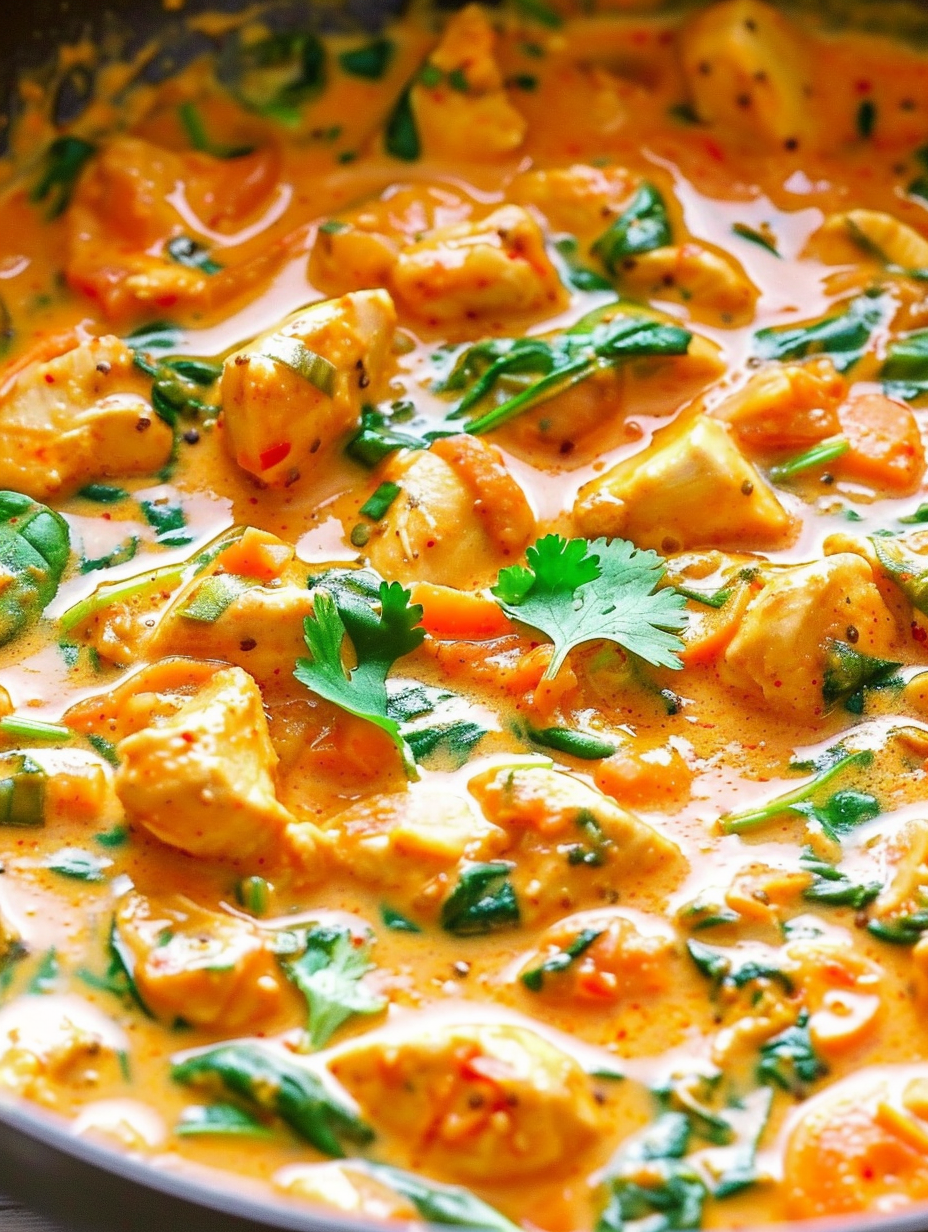
A quick, one-skillet Thai chicken coconut curry that’s ready in 20 minutes—bright, creamy, and full of layered flavors. Low-cal and family-friendly.
Thai Chicken Coconut Curry
This Thai chicken coconut curry has been a go-to in my kitchen for busy weeknights and lazy Sundays alike. I first discovered the combination of creamy coconut milk, vibrant red curry paste, and bright lime when I was experimenting with pantry staples during a hectic week. The result was a fragrant, comforting skillet dinner that felt indulgent but came together in under 30 minutes. It quickly replaced several takeout nights and became something my family requests when we want bold flavors without a lot of fuss. The texture balance is what sold me: tender bite-sized pieces of chicken tucked into a silky coconut sauce punctuated with sweet carrots and wilted spinach. The curry paste brings heat and aromatic depth while ginger and coriander round out the profile. It’s one of those dishes that tastes like it took more time than it did, and because it’s made in a single pan, cleanup is mercifully easy. I often serve it over rice or quinoa, but a wedge of toasted naan and an extra squeeze of lime elevate it to something celebratory.

Why You'll Love This Recipe

  • Ready in about 30 minutes from start to finish—10 minutes active prep and roughly 20 minutes cooking—perfect for weeknights when time is short.
  • Made in one skillet, which saves time on cleanup and keeps all the flavors concentrated in a single pan.
  • Flexible ingredients: swap olive oil for coconut oil, use lite or full-fat coconut milk depending on how rich you want the sauce, and adjust curry paste to taste.
  • Balanced nutrition—protein from chicken, fiber and vitamins from spinach and carrots—yet tastes like comfort food thanks to coconut and warm spices.
  • Make-ahead friendly: the curry stores well in the refrigerator for up to a week and can be frozen for meal prep, making it ideal for planning lunches or quick dinners.
  • Uses common pantry staples and is easy to scale up for guests or halve for an intimate meal.

My partner and I remember the first time we served this to friends: everyone cleared their plates and kept commenting on how fresh and layered the flavors were. It’s become the dish I turn to when I want something impressive but effortless—simple techniques yield complex results, and the aroma that fills the kitchen as it simmers is worth the whole process.
Ingredients

  • Coconut oil (2 to 3 tablespoons): Use virgin coconut oil for a pronounced coconut aroma, or substitute olive oil if you prefer a more neutral base; the fat helps brown the chicken and bloom spices.
  • Sweet Vidalia or yellow onion (1 medium, diced small): A sweeter onion softens quickly and lends subtle sweetness to balance the spice—look for firm, unblemished bulbs.
  • Boneless skinless chicken breast (1 pound, diced): Cut into uniform 1-inch pieces so it cooks evenly; you can use thighs for more richness and moisture.
  • Garlic (3 cloves, finely minced): Fresh garlic is key for fragrance; press or mince finely so it disperses evenly through the sauce.
  • Ginger (2 to 3 teaspoons ground or 1 tablespoon fresh, minced): Fresh ginger gives brightness and a peppery note—use ground if that’s what you have, but reduce slightly as ground is more concentrated.
  • Ground coriander (2 teaspoons): Adds a lemony, floral warmth that complements the curry paste; toasted freshly ground coriander seeds are even better if you have them.
  • Coconut milk (one 13-ounce can, lite or full-fat): Full-fat gives a richer, thicker sauce; lite keeps calories down while still providing creaminess.
  • Shredded carrots (1 to 1 1/2 cups): Thinly shredded carrots cook quickly and add natural sweetness and texture.
  • Thai red curry paste (1 to 3 tablespoons): Start with less and taste; brands vary in heat. Use a mild brand for family-friendly spice or up it for more kick. Curry powder can substitute in a pinch.
  • Kosher salt and freshly ground black pepper: Season to taste—salt is what balances the coconut and cuts through the richness.
  • Fresh spinach (about 3 cups): Wilted spinach brightens the dish and adds color and nutrients; baby spinach works beautifully.
  • Lime juice (1 tablespoon): A bright finish—fresh-squeezed is best. It lifts the sauce and balances the richness of the coconut.
  • Brown sugar (1 to 2 tablespoons, optional): Adds a touch of caramelized sweetness to round flavors if your curry paste is especially tart or spicy.
  • Fresh cilantro (1/4 cup, chopped): Garnish for herbaceous freshness; swap basil for a different Thai accent.
  • Rice, quinoa, or naan (for serving, optional): Choose based on preference; jasmine rice is traditional and fragrant.

Instructions

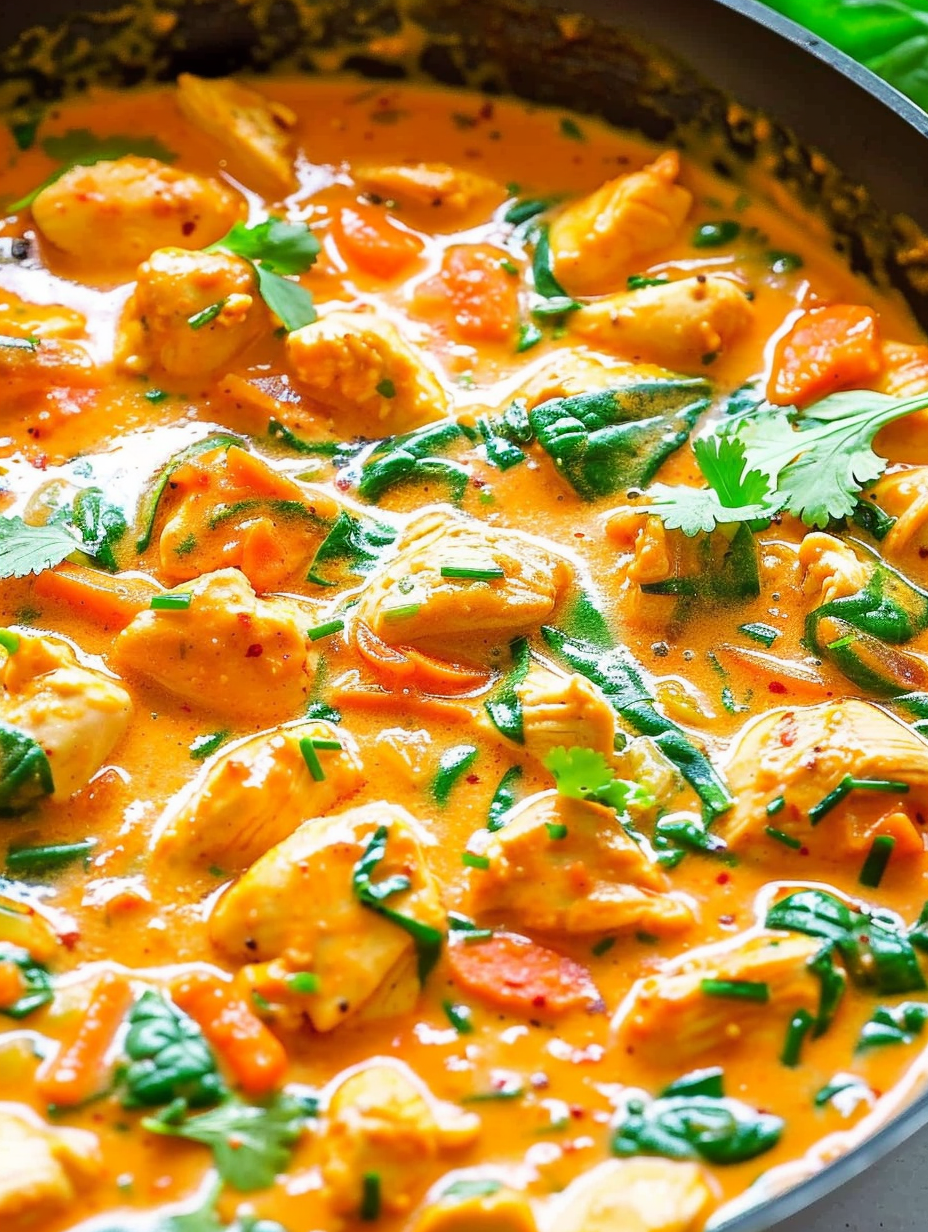
Sauté the aromatics and onion: Heat 2 to 3 tablespoons of coconut oil in a large skillet over medium-high heat. Add the diced onion and sauté, stirring occasionally, until translucent and beginning to soften, about 4 to 5 minutes. Look for glossy, slightly browned edges—this caramelization builds flavor. Cook the chicken: Add the diced chicken to the skillet and spread into a single layer. Cook for about 4 to 6 minutes, stirring and flipping frequently, until the outside is lightly browned and the interior is just cooked through. Use a thermometer if unsure—internal temperature should reach 165°F (74°C) for chicken breast. Add garlic, ginger, and spices: Reduce heat slightly and stir in the minced garlic, fresh or ground ginger, and 2 teaspoons ground coriander. Cook for about 30 to 60 seconds until fragrant—this step blooms the spices and deepens the aromatic base. Be careful not to burn the garlic. Combine coconut milk and vegetables: Pour in one 13-ounce can of coconut milk and add the shredded carrots. Stir in 1 to 3 tablespoons red curry paste (start with 1 tablespoon and adjust later), 1 teaspoon kosher salt, and 1/2 teaspoon black pepper. Bring the mixture to a gentle simmer over medium heat, then reduce to maintain a low simmer for about 5 minutes. Allow the liquid to reduce and thicken slightly; this concentrates flavor and melds the ingredients. Finish with greens and brighteners: Stir in the fresh spinach and 1 tablespoon lime juice. Cook just until the spinach wilts, about 1 to 2 minutes. Taste and adjust seasoning—add brown sugar if you want a touch of sweetness, or extra curry paste for more heat. Scatter chopped cilantro over the top before serving. Thai chicken coconut curry in skillet

You Must Know

  • This dish is high in protein and provides vegetables in each serving—keeps well refrigerated in an airtight container for up to one week and freezes well for up to three months.
  • Using full-fat coconut milk results in a creamier, thicker sauce; lite coconut milk reduces calories but yields a thinner sauce—adjust simmer time to concentrate.
  • Thai red curry paste brands vary widely in heat. Start with 1 tablespoon and add more after tasting. If you’re serving children, use the milder end.
  • The curry is naturally gluten-free if your curry paste doesn’t contain wheat—always check labels if you need strict gluten-free compliance.

My favorite aspect is how forgiving the method is: overcooked chicken can be rescued by simmering a bit longer in the sauce, and extra greens can be stirred in at the end to bulk it up. Friends who try it for the first time almost always ask for the recipe—there’s something about the balance of spice, coconut, and lime that resonates with both comfort and brightness.

Storage Tips

Store leftovers in airtight containers in the refrigerator for up to one week; I like to divide into individual portions for quick lunches. To freeze, cool completely, transfer to freezer-safe containers, and freeze for up to three months. Thaw in the refrigerator overnight and reheat gently on the stovetop over low heat, adding a splash of water or coconut milk if the sauce has thickened. Reheat in the microwave if necessary, stirring halfway through to ensure even warming and prevent separation. Look for bright color and a fresh aroma when reheating—if the sauce smells off, discard it.

Ingredient Substitutions

If you don’t have coconut oil, olive oil or avocado oil work well. Swap chicken thighs for breasts for a juicier result—adjust cooking time slightly. Use kale or chard instead of spinach for heartier greens, but add them earlier as they take longer to soften. If you prefer milder heat, substitute 1 teaspoon of mild curry powder for the red curry paste and add a pinch of paprika for color. For a dairy-free but richer sauce, stir in a tablespoon of almond butter or cashew butter for body—note the change in flavor profile.
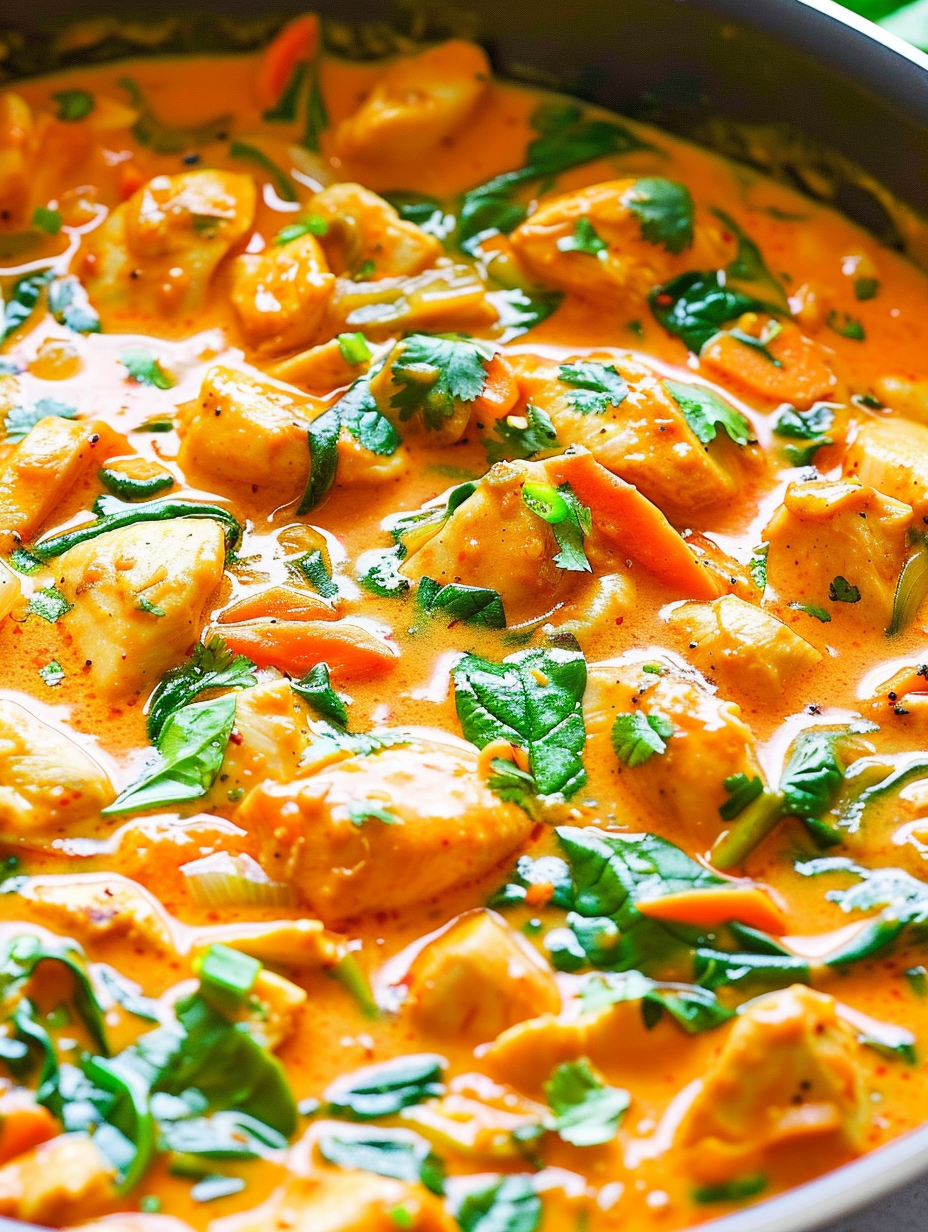
Serving suggestion with rice and cilantro

Serving Suggestions

Serve over jasmine rice for a classic pairing, or choose quinoa for extra protein and a nuttier texture. Spoon the curry into shallow bowls and garnish with extra lime wedges, chopped cilantro, and thinly sliced green onions. For contrast, add a small side of sliced cucumber dressed with rice vinegar for crunch and acidity. Serve with warm naan brushed with butter for dipping into the sauce—this makes the meal feel more festive for weekend dinners or guests.

Cultural Background

This curry draws on Thai flavor principles: balancing sweet, salty, sour, and spicy. Red curry paste traditionally contains dried red chilies, garlic, lemongrass, galangal, and shrimp paste—commercial jars vary, so the final dish reflects the chosen brand. Coconut milk is a staple in many Thai coastal dishes, lending richness and tempering heat from chilies. While this one-skillet version is simplified for modern home kitchens, it honors the Southeast Asian tradition of layered aromatics and fresh herbs.

Seasonal Adaptations

In winter, add root vegetables like diced sweet potato or butternut squash to make the curry heartier—add them early so they soften. In spring and summer, increase fresh herbs like Thai basil and add snap peas or diced bell pepper for brightness. For holiday gatherings, double the batch and serve family-style in a warmed shallow bowl with extra garnishes so guests can customize their heat and acidity with lime and chopped chilies.

Meal Prep Tips

For make-ahead meals, prepare the curry up to the point before adding spinach and lime, cool, and refrigerate. When reheating, add fresh spinach and lime juice at the end to retain brightness. Portion into microwave-safe containers for grab-and-go lunches and top with fresh cilantro just before eating. If freezing, leave out delicate herbs and fresh lime until reheating for best quality.

All in all, this curry is one of those practical, joyful dishes that fits weeknight life while still feeling special—easy to scale, easy to tweak, and delicious warm from the skillet. Give it a try and make it your own by adjusting the heat, herbs, and accompaniments to suit your family’s tastes.

Pro Tips

  • Taste and adjust seasoning after the spinach is added; the greens and lime can change perceived saltiness and acidity.

  • If the sauce becomes too thin, simmer a few minutes longer to reduce and concentrate flavor; if too thick, add a splash of water or coconut milk.

  • Use a single large skillet with high sides to keep control over splatter and to make stirring easier, especially when adding coconut milk.

This nourishing thai chicken coconut curry recipe is sure to be a staple in your kitchen. Enjoy every moist, high protein slice — it is perfect for breakfast or as a wholesome snack any time.

FAQs about Recipes

How long does the curry keep?

Yes—store in an airtight container in the refrigerator for up to 1 week. For longer storage, freeze for up to 3 months and thaw overnight in the refrigerator before reheating.

How spicy is the dish and can I adjust the heat?

Start with 1 tablespoon of red curry paste and add more after tasting. Brands vary widely in heat and saltiness so adjust gradually.

Can I use chicken thighs instead of breast?

Use boneless skinless chicken thighs for juicier meat; reduce cook time slightly as thighs can stay moister and require a shorter sear.

Tags

Centerpiece MealsThai cuisineCurryOne-PanHealthyCoconut milkWeeknight meals
No ratings yet

Thai Chicken Coconut Curry

This Thai Chicken Coconut Curry recipe makes perfectly juicy, tender, and flavorful steak every time! Serve with potatoes and a side salad for an unforgettable dinner in under 30 minutes.

Servings: 6 steaks
Thai Chicken Coconut Curry
Prep:10 minutes
Cook:20 minutes
Rest Time:10 mins
Total:30 minutes

Ingredients

Main

Instructions

1

Sauté onion in oil

Heat 2 to 3 tablespoons of coconut oil in a large skillet over medium-high heat. Add the diced onion and sauté, stirring occasionally, until it softens and starts to caramelize, about 4 to 5 minutes.

2

Cook chicken

Add the diced chicken to the skillet and cook in a single layer, stirring and flipping frequently, until the pieces are lightly browned and cooked through, about 4 to 6 minutes. Ensure an internal temperature of 165°F (74°C).

3

Add aromatics and spices

Reduce heat slightly and stir in the minced garlic, ginger, and ground coriander. Cook until fragrant, about 30 to 60 seconds, taking care not to burn the garlic.

4

Combine coconut milk and carrots

Pour in one 13-ounce can of coconut milk and add shredded carrots, curry paste, salt, and pepper. Bring to a gentle simmer and reduce heat to maintain a low simmer for about 5 minutes to allow the sauce to thicken and flavors to meld.

5

Finish with spinach and lime

Stir in fresh spinach and 1 tablespoon lime juice and cook just until the spinach wilts, about 1 to 2 minutes. Taste and adjust seasoning with additional curry paste, salt, pepper, or brown sugar as needed.

6

Garnish and serve

Sprinkle chopped cilantro over the curry and serve immediately with rice, quinoa, or naan. Leftovers keep airtight in the fridge for up to 1 week.

Last Step: Please leave a rating and comment letting us know how you liked this recipe! This helps our business to thrive and continue providing free, high-quality recipes for you.

Nutrition

Calories: 474kcal | Carbohydrates: 34g | Protein:
32g | Fat: 25g | Saturated Fat: 8g |
Polyunsaturated Fat: 5g | Monounsaturated Fat:
10g | Trans Fat: 1g | Cholesterol: 253mg | Sodium:
0mg | Potassium: 953mg | Fiber: 0g | Sugar:
0g | Vitamin A: 577IU | Vitamin C: 3mg | Calcium:
47mg | Iron: 6mg

Did You Make This?

Leave a comment & rating below or tag
@platemint on social media!
Thai Chicken Coconut Curry

Categories:

Thai Chicken Coconut Curry

Did You Make This?

Leave a comment & rating below or tag @platemint on social media!

Rate This Recipe

Share This Recipe

Enjoyed this recipe? Share it with friends and family, and don't forget to leave a review!

Comments (1)

Leave a Comment

0/1000 characters
Food Lover
1 day ago

This recipe looks amazing! Can't wait to try it.

Rating:

Comments are stored locally in your browser. Server comments are displayed alongside your local comments.

Family photo

Hi, I'm Wendie!

Chef and recipe creator specializing in delicious Centerpiece Meals cooking. Passionate about sharing easy-to-follow recipes that bring families together around the dinner table.

30-Minute Meals!

Join to receive our email series which contains a round-up of some of our quick and easy family favorite recipes.