
>>

A tender pulled ham slow-roasted in citrus juice with a brown sugar and Dijon rub, shredded and tossed in its flavorful pan drippings for juicy sandwiches or a crowd-pleasing centerpiece.
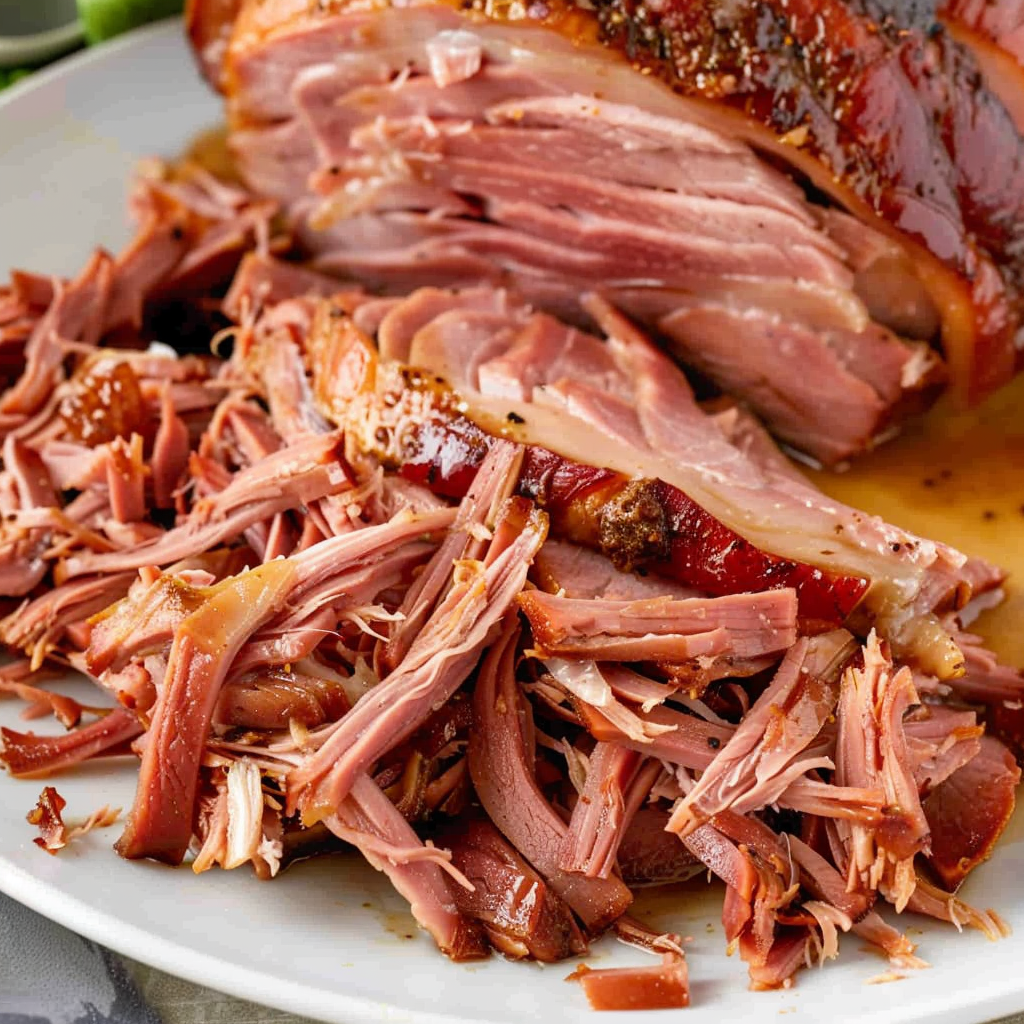
This pulled ham has been one of my favorite ways to transform a smoked bone-in ham into something tender, juicy, and endlessly versatile. I first developed this method when I needed a make-ahead main for a summer family reunion: the ham I bought was generous in size but too salty and firm straight from the package. Slow-roasting it in orange juice with a sweet and tangy spice rub turned it into the most tender, pull-apart meat you can imagine. The crust caramelizes while the interior stays moist, and tossing the shredded meat with the clarified pan drippings gives each bite a glossy, deeply flavored finish.
I remember the first time I shredded a 7-pound ham for that reunion. The kitchen filled with the smell of citrus, brown sugar, and smoked paprika, and everyone kept drifting into the kitchen to taste it warm from the pan. Even picky eaters who usually pass on pork piled their plates high and asked for leftovers. This method is forgiving—perfect for busy holiday plans or a slow weekend cook—and the leftovers are exceptional in sandwiches, tacos, grain bowls, and salads.
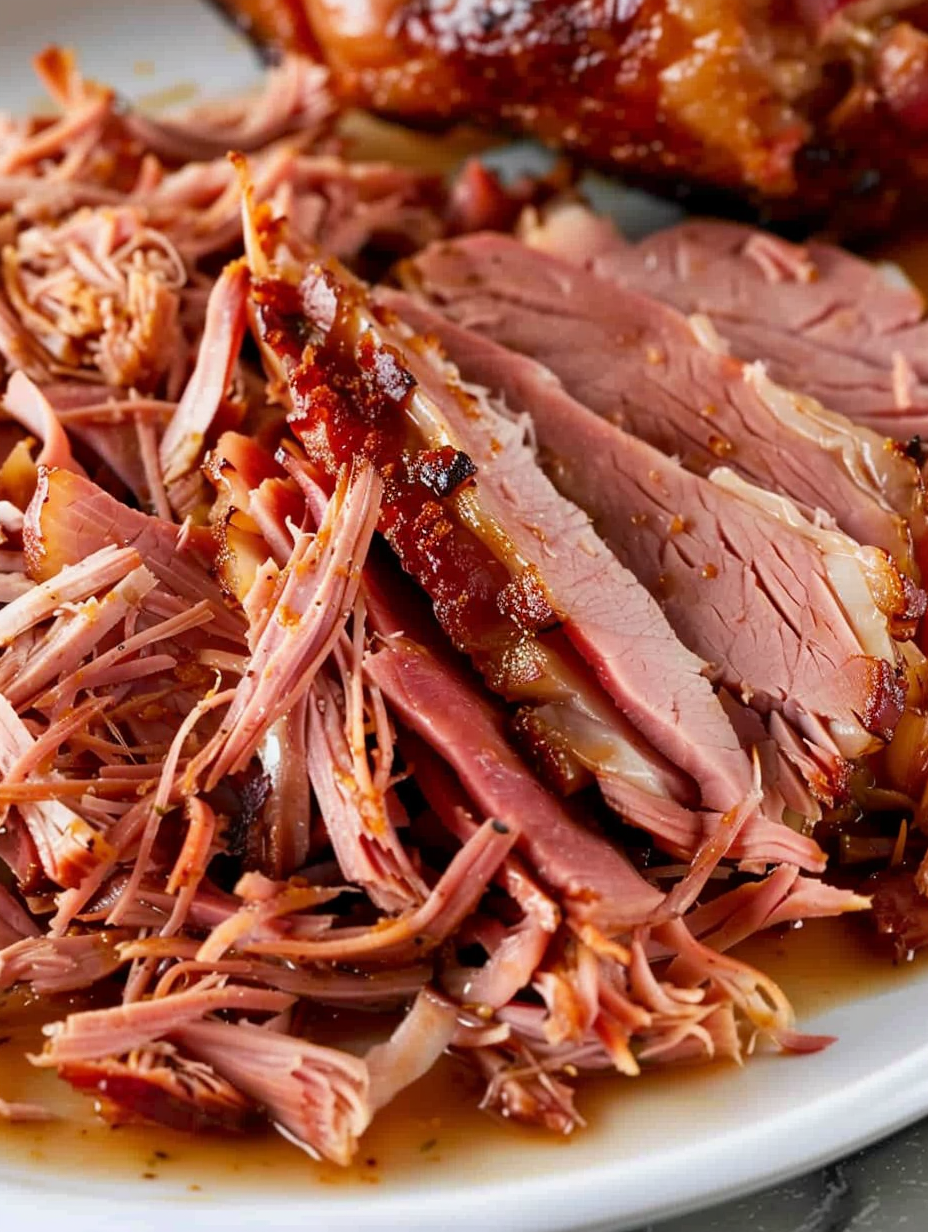
Personally, the best part is the pan drippings. After separating the fat, the remaining syrupy juices are concentrated with brown sugar and smoked paprika flavor. Tossing the shredded meat in those juices turns every bite into a glossy, rich experience that feels like you've spent hours on a sauce when you really spent ten minutes prepping.

My favorite memory with this method is a seaside picnic where I brought a cooler of warm pulled ham sliders. The meat stayed moist in foil and everyone said it tasted like a restaurant special. The technique makes feeding a crowd effortless and consistently delicious.
Store the shredded meat in shallow airtight containers to cool quickly and maintain texture. Refrigerate within two hours of cooking and use within 4 days. For freezing, portion the meat into meal-sized vacuum bags or freezer-safe containers with a thin layer of clarified pan juices to prevent drying; label and freeze for up to 3 months. Thaw overnight in the refrigerator before reheating. To reheat, warm gently in a covered skillet over low heat with a splash of reserved drippings or broth to restore moisture rather than microwaving at high power, which can toughen the pork.
If you prefer a different flavor profile, swap orange juice for pineapple juice for tropical sweetness, or use apple juice for a more neutral background. Replace Dijon with whole-grain mustard for texture and a nuttier note. For less sugar, reduce brown sugar to 1/3 cup and add a tablespoon of maple syrup for complexity. If you have a boneless ham, reduce uncovered roast time by 20 to 30 minutes and monitor tenderness closely. For low-sodium diets, select a reduced-sodium smoked ham and rinse briefly before scoring to remove surface brine.
Serve piled high on toasted slider buns with crisp pickles and coleslaw for classic sandwiches. It also makes a great filling for tacos with pickled red onion and cilantro, or top creamy grits or mashed potatoes for a hearty plate. For a lighter option, add shredded ham to a warm grain bowl with roasted vegetables, arugula, and a drizzle of Dijon vinaigrette. Garnish with chopped parsley or thinly sliced scallions to freshen each serving.
Pulled and shredded pork-style dishes are found across many cuisines, from Southern barbecue to Filipino adobo variations. Using a smoked, pre-cooked ham and slow-roasting it in sweet and tangy juices blends American holiday ham traditions with low-and-slow techniques associated with barbecue. Caramelized sugars and mustard-based glazes are classic in American ham preparations, making this approach a natural crossover that honors both roast and smoke flavors.
In winter, swap orange juice for apple cider and add a pinch of ground cloves or cinnamon to the rub for warm holiday notes. For summer gatherings, use pineapple juice and include a light pineapple slaw on sandwiches. For barbecue season, finish shredded ham with a reduced vinegar-based sauce and serve alongside grilled corn and potato salad to fit a backyard cookout menu.
Plan ahead by roasting the ham a day early and refrigerating the shredded meat in its pan juices. Reheat gently the next day and assemble sandwiches or bowls when needed. Portion into 8 to 12 ounce containers for lunches, and include a small container of reserved juices to refresh the meat at serving time. Use quality freezer bags to remove as much air as possible for longer storage without freezer burn.
Slow-roasting a smoked ham into tender pulled meat is one of the most satisfying transformations in home cooking. It stretches a single large purchase into many meals and reliably delights guests with minimal active effort. Give it a try the next time you want a hands-off centerpiece that feeds a crowd and delivers comforting, savory-sweet flavor in every bite.
Score the ham fat in a shallow crosshatch about 1/8 inch deep so the glaze penetrates without cutting into the meat.
Do not open the oven during the first 4-hour covered roast to maintain consistent low heat and tenderize connective tissue.
Separate fat from drippings by chilling briefly or spooning the liquid into a fat separator, then toss shredded meat with the clarified juices for best texture.
This nourishing slow-roasted pulled ham with sweet-savory pan drippings recipe is sure to be a staple in your kitchen. Enjoy every moist, high protein slice — it is perfect for breakfast or as a wholesome snack any time.
Yes, a boneless ham can be used. Reduce uncovered roasting time by 20 to 30 minutes and test for tenderness frequently because boneless hams cook slightly faster.
Store refrigerated for up to 4 days in an airtight container or freeze for up to 3 months. Reheat gently with reserved pan juices to retain moisture.
This Slow-Roasted Pulled Ham with Sweet-Savory Pan Drippings recipe makes perfectly juicy, tender, and flavorful steak every time! Serve with potatoes and a side salad for an unforgettable dinner in under 30 minutes.
Preheat the oven to 275 degrees F. Line a large roasting pan with heavy-duty foil or parchment and pour 1/2 cup of orange or pineapple juice into the bottom of the pan.
Remove any plastic disk from the bone. Score the ham’s fat in a diagonal crosshatch about 1/8 inch deep. Place the ham flat side down in the prepared pan.
Mix brown sugar, Dijon, apple cider vinegar, smoked paprika, garlic powder, onion powder, and ground ginger. Rub the mixture over the ham, ensuring it is fully coated. Cover the pan tightly with foil.
Bake the covered ham for 4 hours without removing foil or opening the oven. This low and slow step breaks down connective tissue and keeps the meat moist.
Remove the foil and continue roasting uncovered for an additional 1 to 2 hours until the ham reaches about 205 degrees F and is very tender when poked with a fork. Tent with foil if the surface browns too quickly.
Remove the ham from the oven and let rest for 20 minutes. Shred the meat with two forks, discarding the bone and excess fat. Reserve the pan drippings.
Separate fat from the drippings and toss the shredded ham with the clarified pan juices to coat. Serve warm on buns, tacos, or over grains.
Last Step: Please leave a rating and comment letting us know how you liked this recipe! This helps our business to thrive and continue providing free, high-quality recipes for you.
Leave a comment & rating below or tag
@platemint on social media!
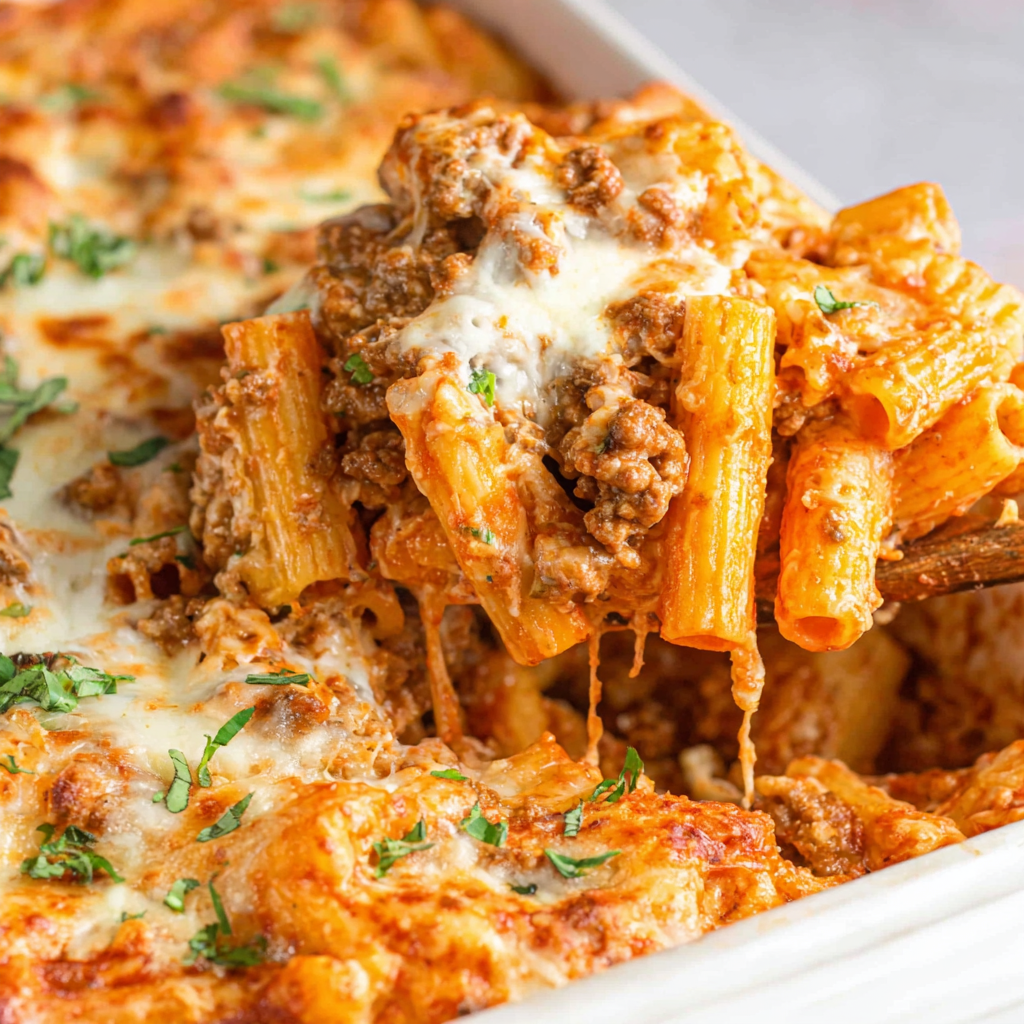
Saucy, cheesy baked ziti with ricotta and basil tastes like lasagna in half the effort, perfect for weeknights or crowds.

Quick, crowd-pleasing cheeseburger sliders baked golden with melty cheddar and savory beef. Ready in 30 minutes, great for parties and easy meal prep.
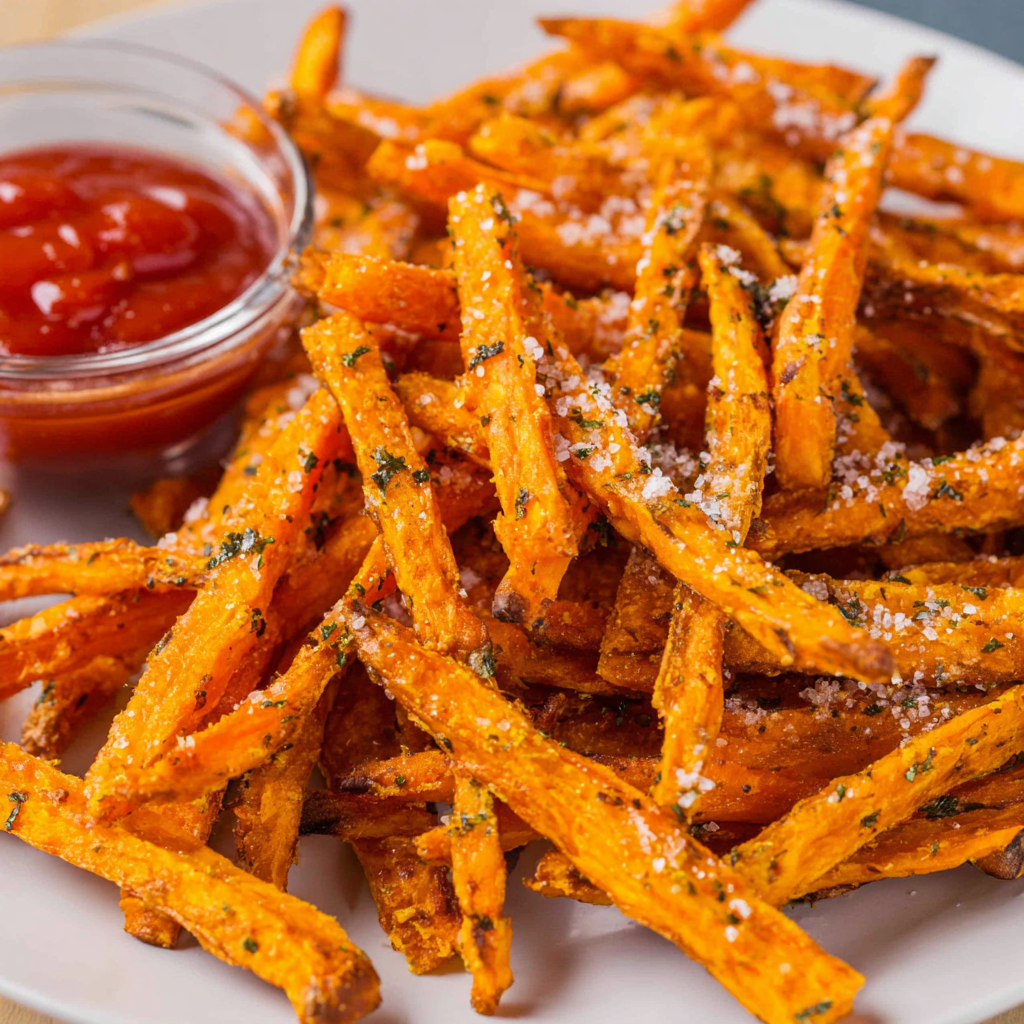
Crispy air fryer sweet potato fries with tender centers, fast-food flavor without deep frying. Ready in minutes and irresistibly snackable.
Leave a comment & rating below or tag @platemint on social media!
Enjoyed this recipe? Share it with friends and family, and don't forget to leave a review!
This recipe looks amazing! Can't wait to try it.
Comments are stored locally in your browser. Server comments are displayed alongside your local comments.

Join to receive our email series which contains a round-up of some of our quick and easy family favorite recipes.