
>>

A fragrant, balanced red Thai curry—tender pork, sweet pineapple, fresh herbs and creamy coconut milk—perfect for weeknight dinners or a memorable dinner party.
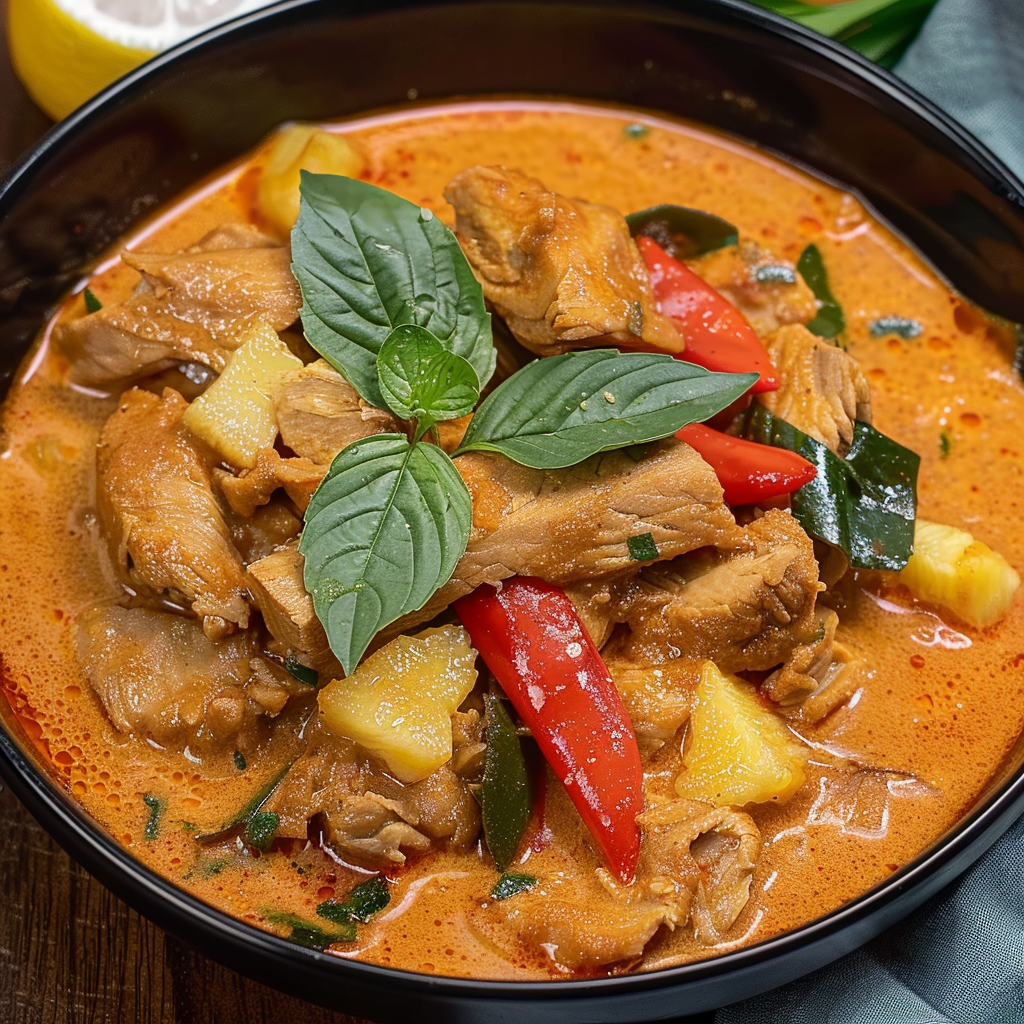
This red Thai curry with pork and coconut milk has been my go-to when I want a fast, impressive centerpiece that still feels like a comforting, home-cooked meal. I first tasted a variation of this dish at a tiny eatery in Chiang Mai during a humid April visit; the interplay of sweet pineapple, bright lime, earthy galangal and the warm heat of red curry paste lodged in my memory. Back at home I built a version that leans on pantry-friendly ingredients without sacrificing authenticity—simple swaps and smart technique mean you can get deep flavor in about an hour.
The texture is what keeps my family coming back: thinly sliced pork that stays tender after a quick sear, softened bell peppers for a bit of snap, and juicy pineapple that releases a sweet-acid note into the sauce. The coconut milk rounds everything out into a silky sauce that carries the aromatics—smashed lemongrass, sliced galangal and kaffir lime leaves—so every spoonful is layered. I love serving this with jasmine rice and a scattering of Thai basil for perfume; it always makes the kitchen smell like travel and sunshine.
My family’s reaction the first time I served this was priceless—my partner went back for seconds and my daughter, who usually avoids anything with a visible spice fleck, asked for more rice to soak up the sauce. I discovered the quickest route to the right depth of flavor was searing the pork first and briefly caramelizing aromatics with a touch of palm sugar; that little step makes the finished dish sing without adding time.
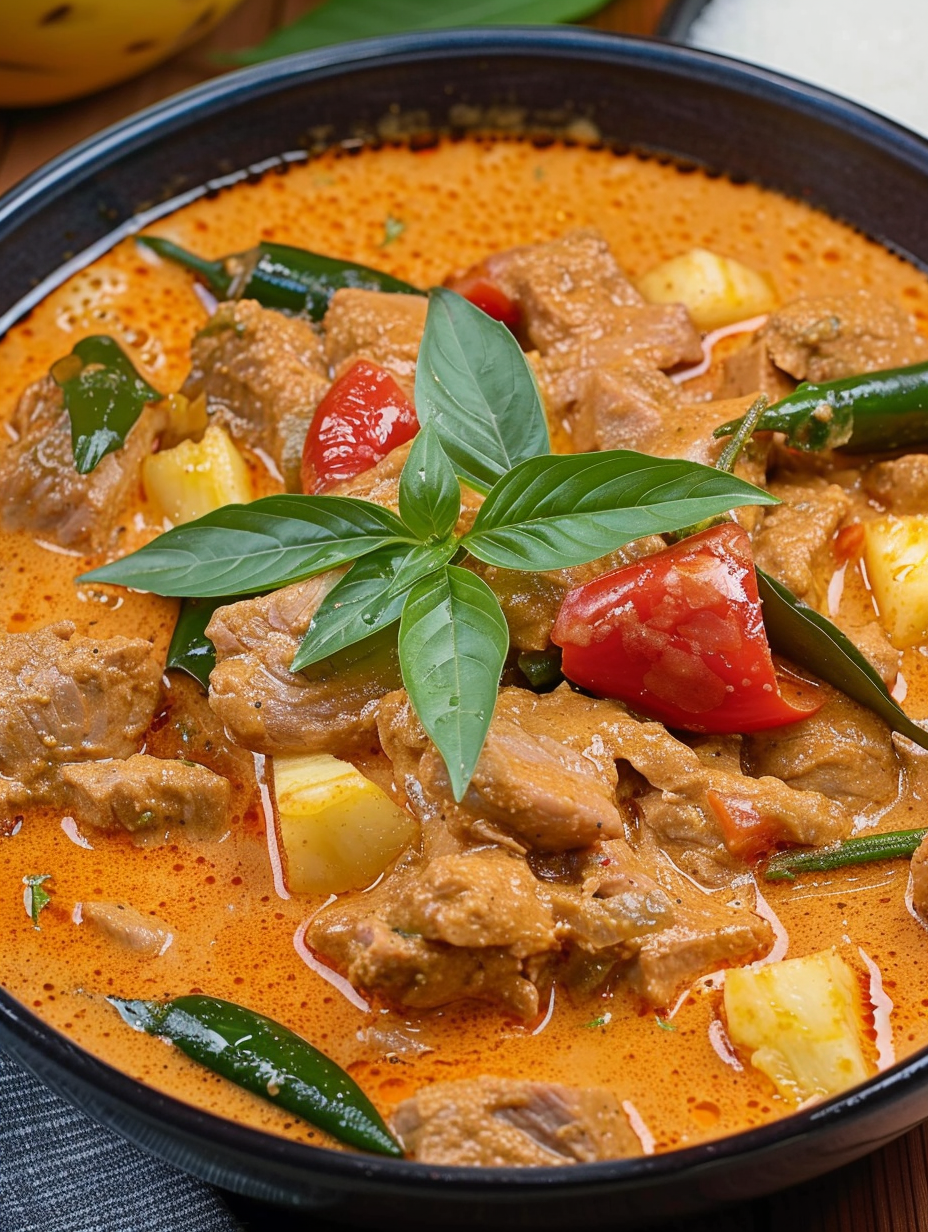
My favorite aspect is how portable this flavor profile is: serve over steamed jasmine rice for a weeknight, or spoon into lettuce cups for a bright starter. It’s also become my go-to dish when I want to impress guests without fuss—simple prep, bold payoff. Friends have commented that the pineapple twist makes the curry feel celebratory, and I've learned to scale aromatics when making larger batches so the balance remains consistent.
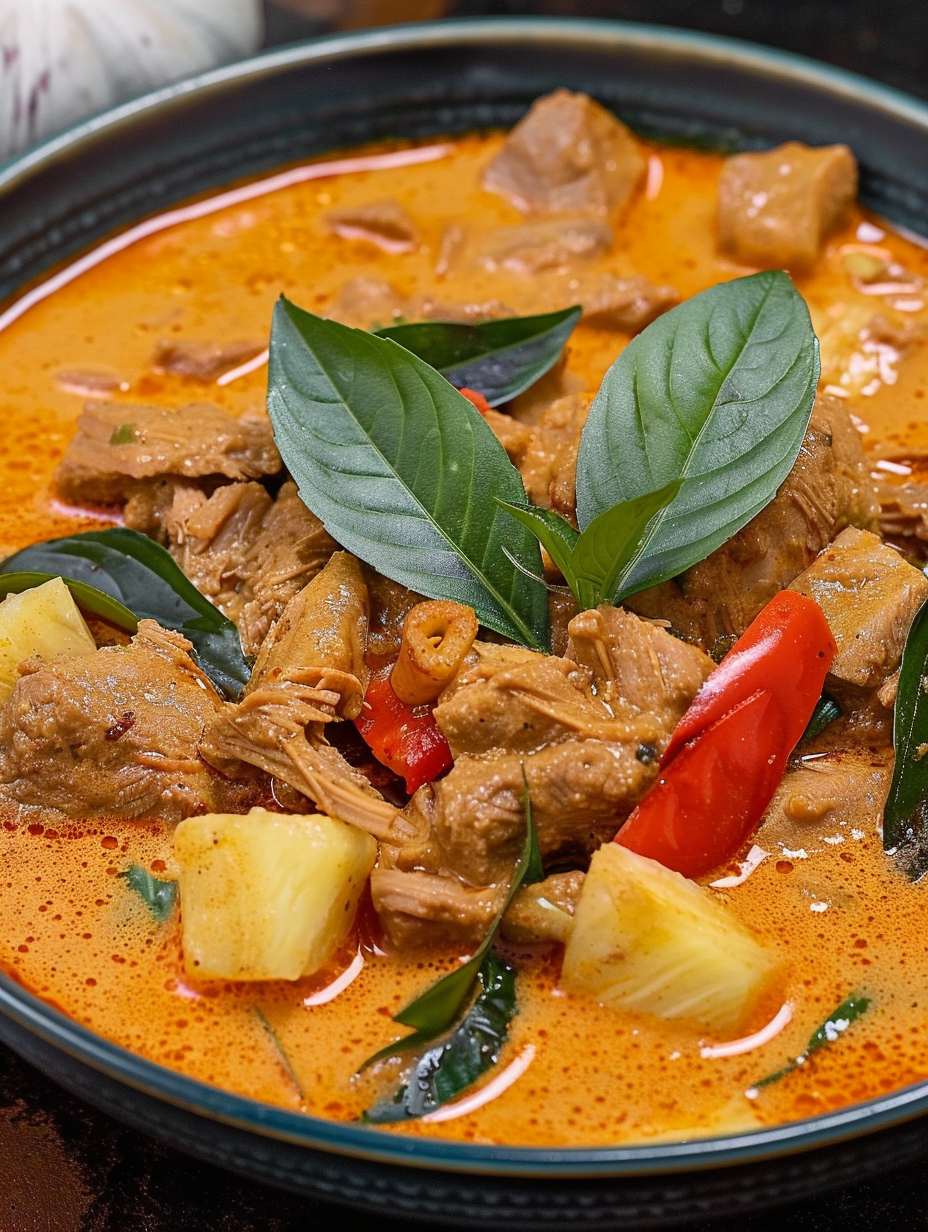
Cool leftovers to room temperature within two hours and store in an airtight container in the refrigerator for up to 3–4 days. For freezing, divide into single-serving freezer-safe containers or heavy-duty freezer bags and remove excess air—label with date and freeze up to 3 months. Thaw overnight in the refrigerator before reheating. To reheat, warm slowly over low heat and add a tablespoon or two of water or stock if the sauce has thickened; high heat can cause coconut milk to separate. If serving later, reheat just until steaming to avoid overcooking the pork.
If galangal is unavailable, fresh ginger is the closest substitute though it imparts a milder, warmer note rather than galangal’s sharper citrusy flavor. Lemongrass can be replaced with 2 teaspoons lemon zest plus 1 tablespoon lemon juice as a last resort. Swap pork for boneless skinless chicken thighs (1 1/3 lb) or firm tofu for a vegetarian version—use soy sauce instead of fish sauce and consider adding a teaspoon of miso for savory depth. For a lighter coconut profile, use light coconut milk but reduce simmer time to maintain creaminess.
Serve over fragrant jasmine rice or sticky rice to soak up the sauce. Garnish with extra Thai basil leaves, thinly sliced red chilies and a lime wedge for brightness. For a full meal, pair with a crisp green papaya salad, steamed Asian greens like gai lan or bok choy, and chilled cucumber slices to cool the palate. For a party, offer small bowls of jasmine rice with the curry spooned on top and let guests customize heat and lime to taste.
Red curry is a classic Thai preparation characterized by red chilies, garlic, shallot, lemongrass and shrimp paste blended into a paste that forms the base of the sauce. Regional variations abound across Thailand—southern styles use more coconut milk and aromatic provisions like galangal and turmeric, while northern versions can be simpler and less sweet. The inclusion of pineapple mirrors coastal and southern Thai influences where sweet-tart fruit is often paired with savory curries.
In summer, use fresh, ripe pineapple and bright basil; in winter, swap to canned pineapple tidbits (rinsed) and add a handful of roasted butternut squash for body. For a spring twist, toss in snap peas and baby corn at the last minute for crunch. Around the holidays, serve alongside fragrant coconut rice and roasted peanuts for a festive texture contrast.
For weekly meal prep, portion the curry into microwave-safe containers with a side of rice in separate compartments. Assemble aromatics and chop vegetables on prep day; marinate pork briefly and refrigerate until cooking to save time. If freezing, undercook the pork slightly—this prevents it from becoming tough after reheating. Keep garnishes like basil and lime wedges separate until serving to preserve freshness.
There’s something wonderfully communal about ladling this curry into bowls and passing a platter of rice around the table. Try it once and you’ll have the core technique—sear, aromatics, simmer—ready to adapt to many proteins and produce. Enjoy the trip to Thailand from the comfort of your kitchen, and make it your own with little tweaks.
Partially freeze the pork for 10–15 minutes to make thin slicing much easier and more even.
Sear the pork in batches to develop Maillard flavors without overcrowding the pan and steaming the meat.
Grate palm sugar finely so it dissolves quickly and caramelizes evenly with the aromatics.
Add fish sauce and lime juice gradually and taste frequently to achieve the ideal sweet-sour-salty balance.
This nourishing red thai curry with pork and coconut milk recipe is sure to be a staple in your kitchen. Enjoy every moist, high protein slice — it is perfect for breakfast or as a wholesome snack any time.
Yes—store in the refrigerator for up to 3–4 days and freeze up to 3 months. Reheat gently over low heat and add a splash of stock if needed.
Use ginger if you can't find galangal, and lemon zest plus juice to mimic lemongrass in a pinch; flavor will be slightly different.
This Red Thai Curry with Pork and Coconut Milk recipe makes perfectly juicy, tender, and flavorful steak every time! Serve with potatoes and a side salad for an unforgettable dinner in under 30 minutes.
Trim and thinly slice pork. Toss with 2 tbsp red curry paste and 1 tbsp fish sauce. Let rest 10–15 minutes to marinate while prepping other ingredients.
Slice peppers, dice shallots, chunk pineapple, slice galangal about 3 mm, and bruise lemongrass. Grate palm sugar if solid. Tear kaffir lime leaves to release oils.
Heat oil in a skillet over medium-high heat and sear pork in batches until browned at edges but not fully cooked, about 1 minute per side. Remove and keep warm.
In a large pot, heat oil and sauté shallots with 1/2 tbsp red curry paste for 2–3 minutes. Add palm sugar, galangal, lemongrass and kaffir lime leaves and caramelize briefly; then add bell peppers.
Pour in coconut milk and chicken stock, add most Thai basil, cover and simmer gently for 10 minutes so aromatics infuse the liquid and peppers soften.
Add seared pork and pineapple, let warm 2 minutes, then stir and simmer 2–3 minutes until pork is cooked through. Adjust with 2–3 tbsp lime juice and a few splashes fish sauce to taste.
Last Step: Please leave a rating and comment letting us know how you liked this recipe! This helps our business to thrive and continue providing free, high-quality recipes for you.
Leave a comment & rating below or tag
@platemint on social media!

Saucy, cheesy baked ziti with ricotta and basil tastes like lasagna in half the effort, perfect for weeknights or crowds.

Quick, crowd-pleasing cheeseburger sliders baked golden with melty cheddar and savory beef. Ready in 30 minutes, great for parties and easy meal prep.

Crispy air fryer sweet potato fries with tender centers, fast-food flavor without deep frying. Ready in minutes and irresistibly snackable.
Leave a comment & rating below or tag @platemint on social media!
Enjoyed this recipe? Share it with friends and family, and don't forget to leave a review!
This recipe looks amazing! Can't wait to try it.
Comments are stored locally in your browser. Server comments are displayed alongside your local comments.

Join to receive our email series which contains a round-up of some of our quick and easy family favorite recipes.