>>

Tender seared steak, glossy sweet-savory sauce, and springy lo mein come together in one pan for a fast, crowd-pleasing weeknight favorite.
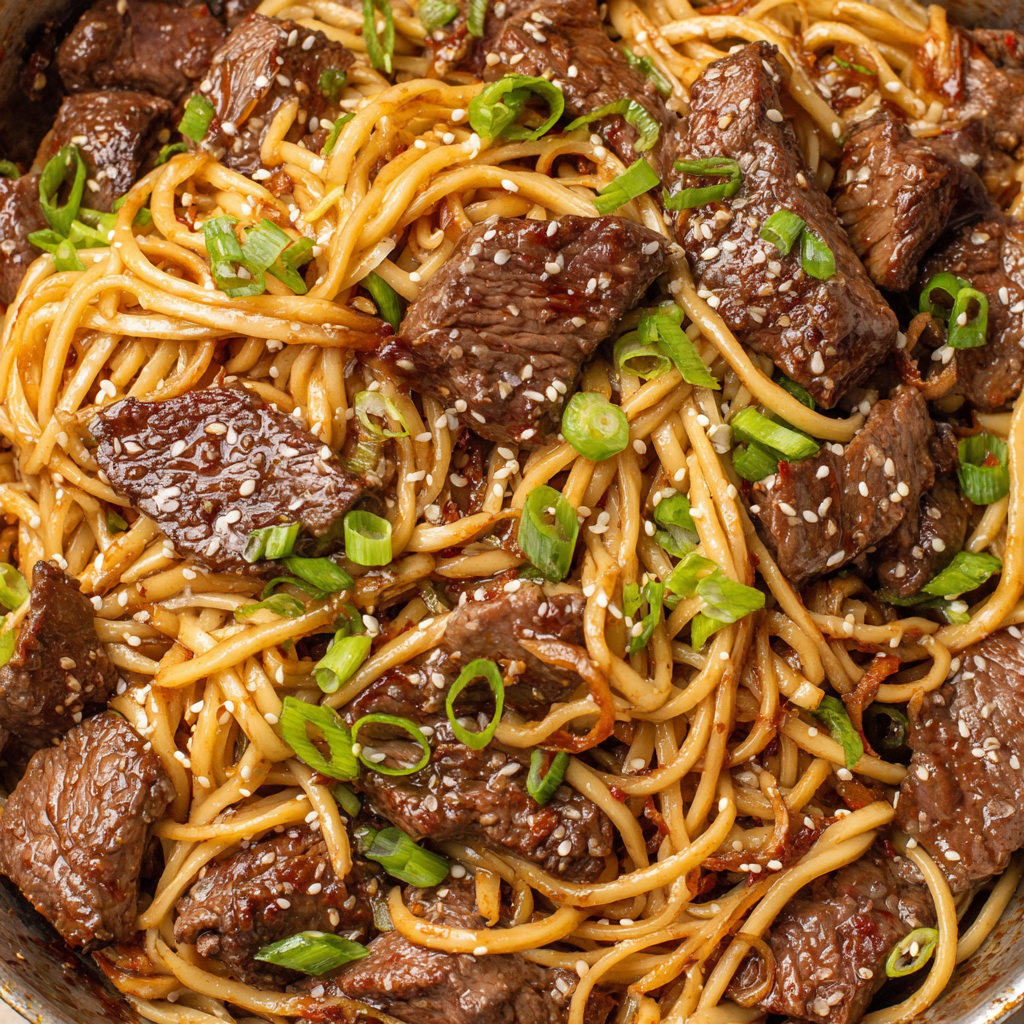
I have made this on soccer practice nights and holiday-eve crunch times, and it saves dinner every single time. My family loves the sticky-sweet glaze and that tangle of noodles, and I love watching the skillet go from simple pantry ingredients to a shiny, satisfying meal.
My favorite part is watching the sauce go from thin and dark to shiny and syrupy after just a minute of simmering. When the noodles hit the pan, the whole kitchen smells like ginger and toasted sesame. It reminds me of quick dinners before a movie night, bowls balanced on our laps, everyone hunting for those caramelized edges of steak.
Cool leftovers quickly and store in shallow, airtight containers to preserve texture. Refrigerate for up to 3 days. Reheat in a nonstick skillet over medium heat with 1 to 2 tablespoons water to loosen the sauce, tossing until hot. You can also microwave in short bursts, stirring between intervals, but the skillet method keeps the noodles bouncier. For freezing, portion into freezer-safe containers and freeze up to 2 months. Thaw overnight in the refrigerator before reheating. If the sauce seems thick after thawing, add a splash of water or low-sodium broth to restore that glossy coating. Avoid leaving the dish at room temperature for more than 2 hours.
If flat iron is unavailable, flank steak or skirt steak works well; slice even thinner and sear very fast to keep it tender. Gluten-free needs can be met with tamari and gluten-free hoisin, plus a gluten-free noodle like rice noodles or gluten-free spaghetti; expect a slightly lighter sauce body. Light brown sugar can be swapped 1:1 with dark brown sugar for deeper caramel notes. No chili sesame oil? Use regular sesame oil and add a pinch of red pepper flakes to taste. Fresh ginger can be substituted with 1/2 teaspoon ground ginger in a pinch, though the aroma will be softer. For extra veg, fold in thinly sliced bell peppers or snap peas during the sauce simmer; cook 2 to 3 minutes until crisp-tender.
Serve the noodles in wide bowls so the sauce pools and every bite stays coated. A sprinkle of sesame seeds and a big handful of fresh green onions adds color and crunch. For a bright side, pair with a quick cucumber salad dressed with rice vinegar and a pinch of sugar. Steamed broccoli or blistered green beans also fit the flavor profile and add freshness to the plate. If you are entertaining, place the skillet in the center of the table family-style alongside chili crisp, extra sesame oil, and lime wedges so guests can customize their bowls.
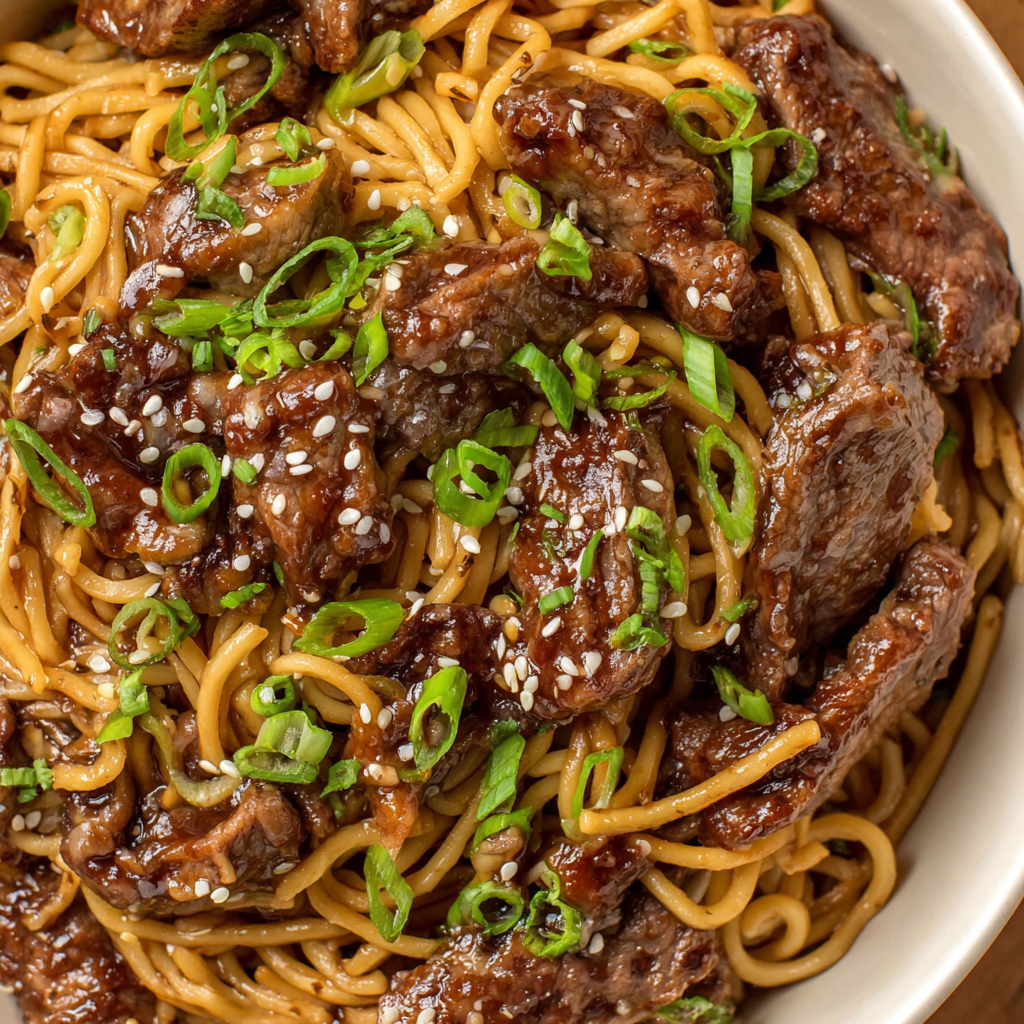
Mongolian beef, as many American diners know it, is a Chinese-American restaurant classic rather than a traditional Mongolian dish. Its signature sweet-savory sauce, ginger, and green onions are rooted in Chinese stir-fry techniques and adapted for American palates. The noodle twist follows the same spirit: fast-cooking, sauce-forward, and built for weeknight speed. What makes it so enduring is that satisfying balance of salty, sweet, and aromatic heat, plus the textural contrast of tender beef against slurpable noodles. This home version channels those takeout flavors while letting you control salt, sugar, and heat.
In spring, toss in asparagus tips and pea shoots during the last minute of cooking. Summer invites thin ribbons of zucchini or a handful of corn kernels for pop and sweetness. In fall, add julienned carrots and a few mushrooms to make the sauce earthy and full. Winter is all about warmth: a little extra ginger and a dash more chili oil feel cozy without being heavy. Around the holidays, I like to plate it with a crown of quick-pickled red onions for brightness and festive color.
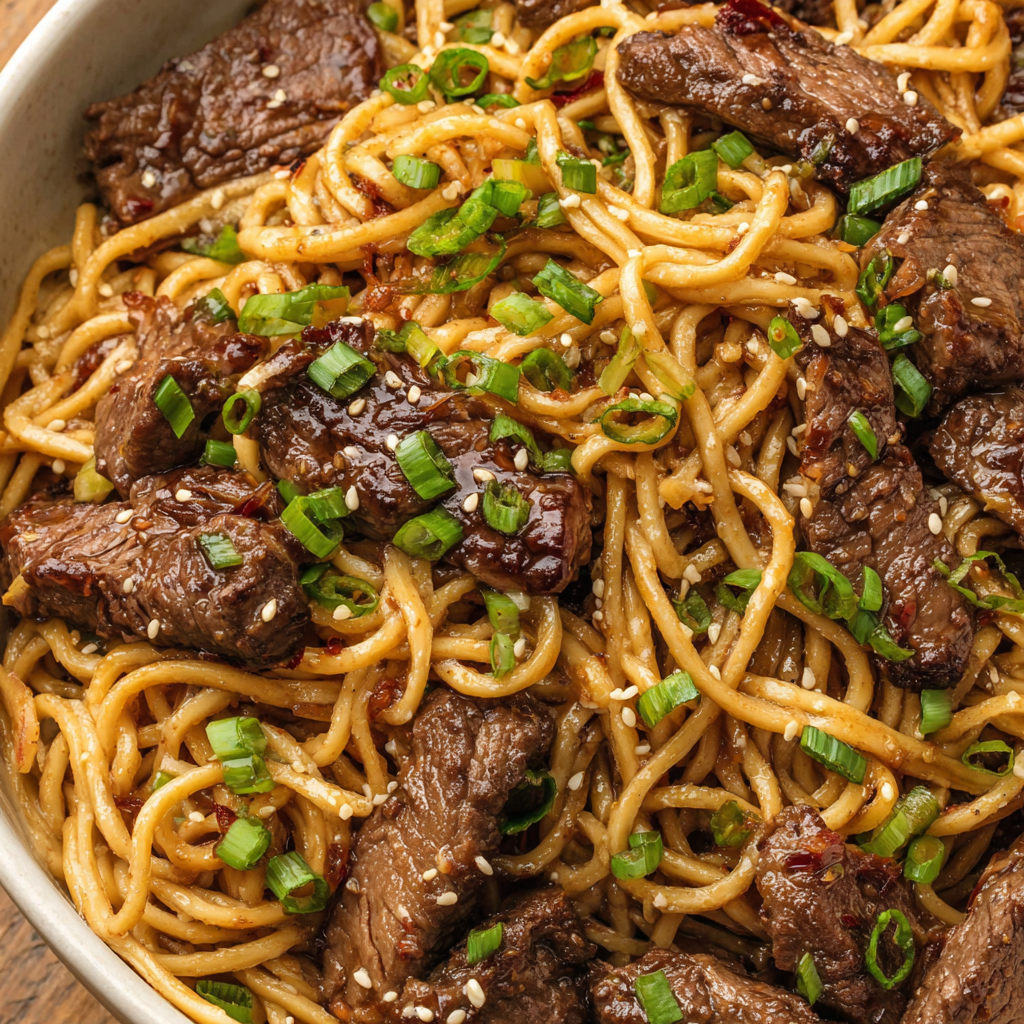
Slice the steak up to 24 hours ahead and refrigerate tightly covered. You can also whisk the sauce ingredients and store them in a jar for up to 3 days; shake before using. Cook noodles a few hours in advance, rinse, toss with 1 teaspoon neutral or sesame oil, and refrigerate. When dinner time comes, sear the beef, simmer the sauce, and toss everything together in minutes. For workday lunches, portion into microwave-safe containers with a sprinkle of green onions on top, then reheat gently with a splash of water to revive the glaze.
If this dish becomes a go-to in your kitchen like it has in mine, do not be surprised when it is requested on repeat. It is fast, glossy, and wonderfully slurpable, the kind of comfort you can share without fuss. Make it once, and you will know exactly how to make it your own next time.
Freeze steak 20 minutes for easier paper-thin slicing against the grain.
Do not overcrowd the pan; sear in two batches for browned edges.
Rinse noodles briefly to stop cooking, then oil lightly to prevent clumping.
Simmer the sauce 1 to 2 minutes before adding noodles for a shiny, clingy glaze.
This nourishing one-pan mongolian beef noodles recipe is sure to be a staple in your kitchen. Enjoy every moist, high protein slice — it is perfect for breakfast or as a wholesome snack any time.
Yes. Use tamari and a gluten-free hoisin, then swap in rice noodles or certified gluten-free spaghetti. Expect a slightly lighter sauce body and add a teaspoon more cornstarch if you prefer a thicker glaze.
Flat iron is my top pick for tenderness and flavor. Sirloin, flank, or skirt also work; slice very thinly against the grain and sear quickly to keep them tender.
Leftovers keep up to 3 days in the refrigerator. Reheat in a skillet with a tablespoon of water to loosen the sauce and restore gloss.
This One-Pan Mongolian Beef Noodles recipe makes perfectly juicy, tender, and flavorful steak every time! Serve with potatoes and a side salad for an unforgettable dinner in under 30 minutes.
Bring a pot of water to a boil. Cook noodles per package directions until just tender. Drain, rinse under cold water to stop cooking, and toss with a little sesame or neutral oil to prevent sticking. Set aside.
Pat steak dry and slice thinly against the grain. Sprinkle with cornstarch and toss until evenly coated, shaking off excess.
Heat a large skillet over medium-high with 1 tablespoon oil. Sear half the beef 1 to 2 minutes per side; transfer to a plate. Add remaining 1 tablespoon oil and repeat with remaining beef.
Lower heat to medium-low. Whisk soy sauce, hoisin, water, brown sugar, rice vinegar, and chili sesame oil. Add to skillet with garlic, ginger, and green onions. Simmer 1 to 2 minutes.
Add noodles and seared beef to the skillet. Toss until coated and heated through, 1 to 2 minutes. Garnish with more green onions and sesame seeds. Serve immediately.
Last Step: Please leave a rating and comment letting us know how you liked this recipe! This helps our business to thrive and continue providing free, high-quality recipes for you.
Leave a comment & rating below or tag
@platemint on social media!
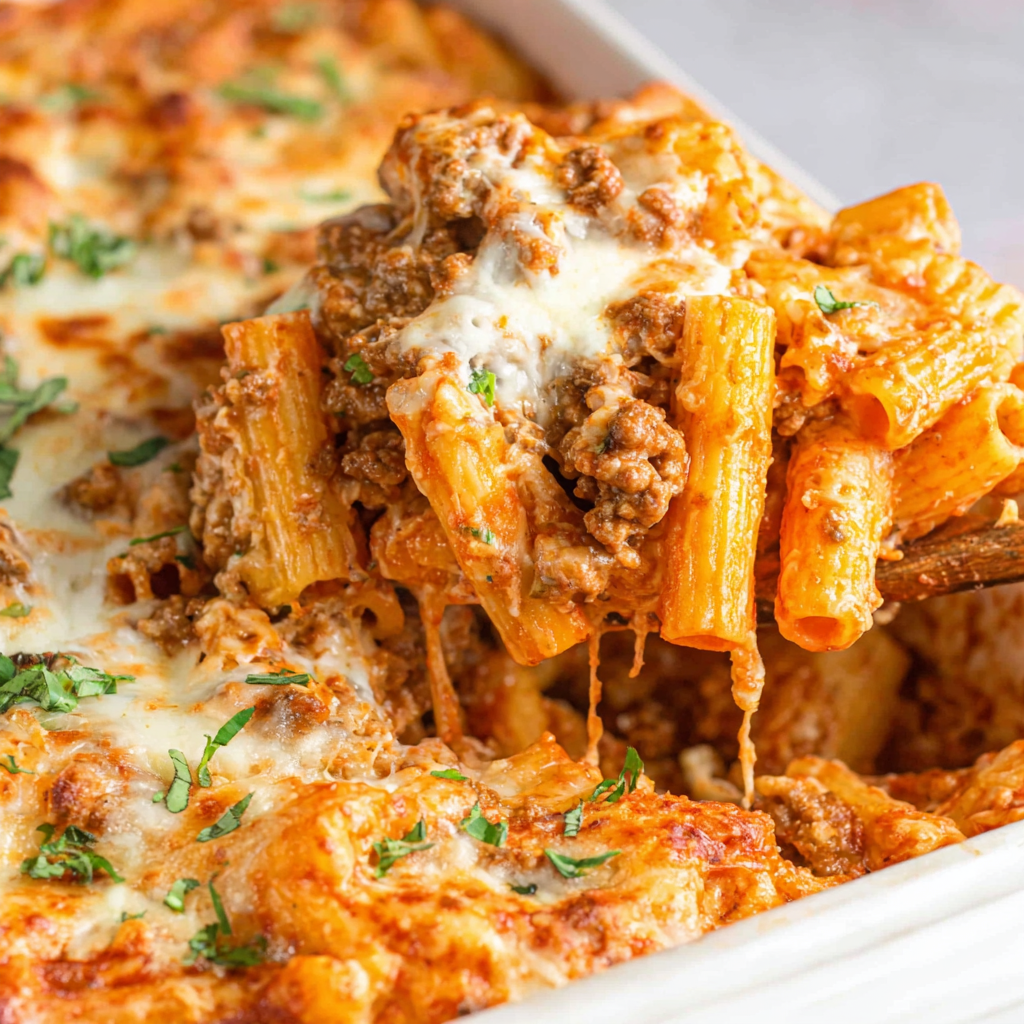
Saucy, cheesy baked ziti with ricotta and basil tastes like lasagna in half the effort, perfect for weeknights or crowds.
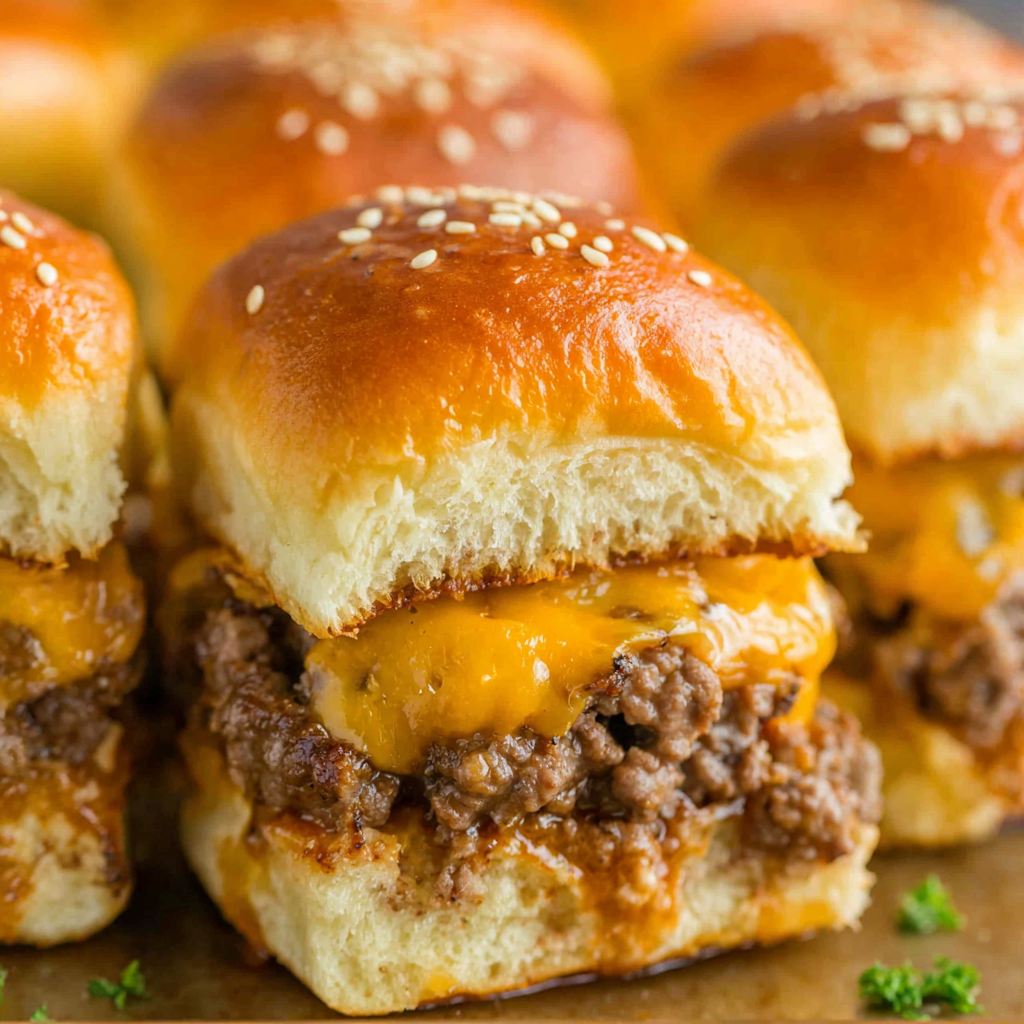
Quick, crowd-pleasing cheeseburger sliders baked golden with melty cheddar and savory beef. Ready in 30 minutes, great for parties and easy meal prep.
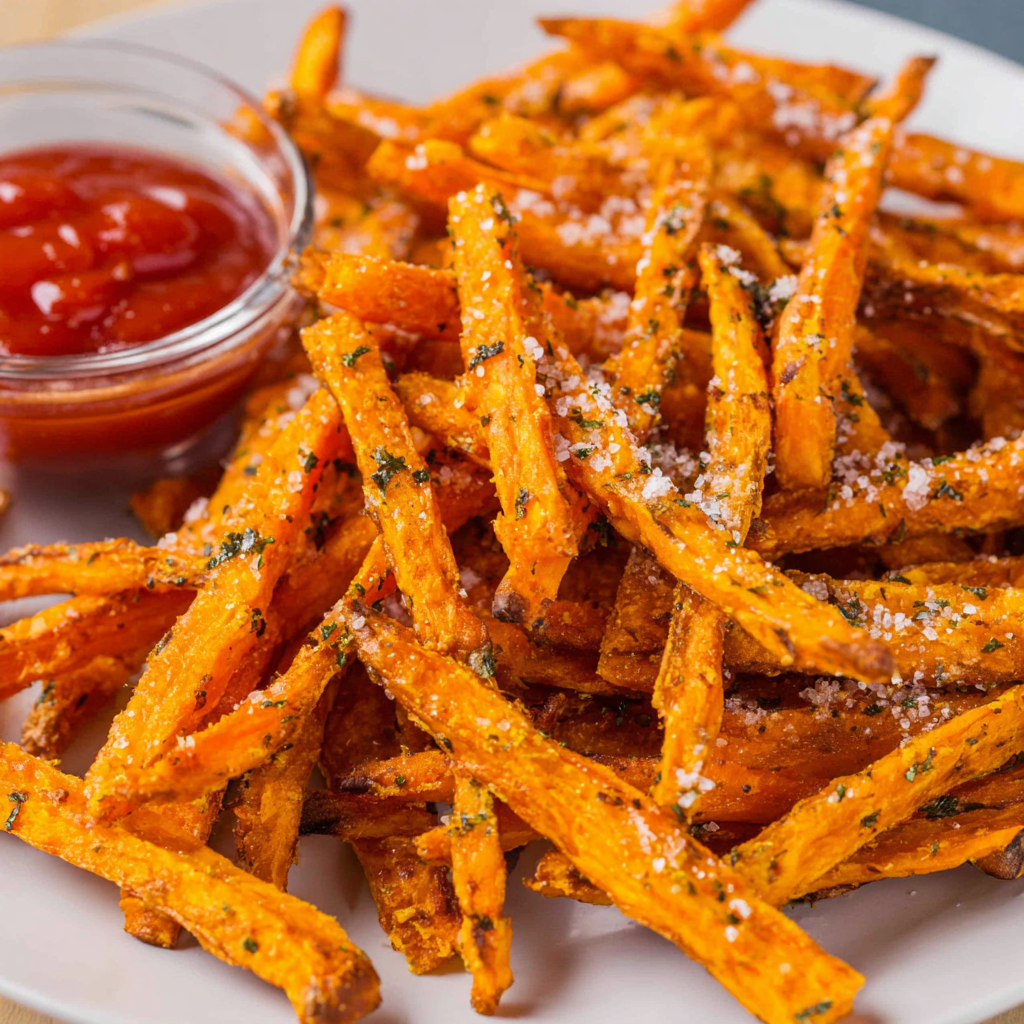
Crispy air fryer sweet potato fries with tender centers, fast-food flavor without deep frying. Ready in minutes and irresistibly snackable.
Leave a comment & rating below or tag @platemint on social media!
Enjoyed this recipe? Share it with friends and family, and don't forget to leave a review!
This recipe looks amazing! Can't wait to try it.
Comments are stored locally in your browser. Server comments are displayed alongside your local comments.

Join to receive our email series which contains a round-up of some of our quick and easy family favorite recipes.